

Rebranding and corporate change: Realigning the brand when the company changes

brand design
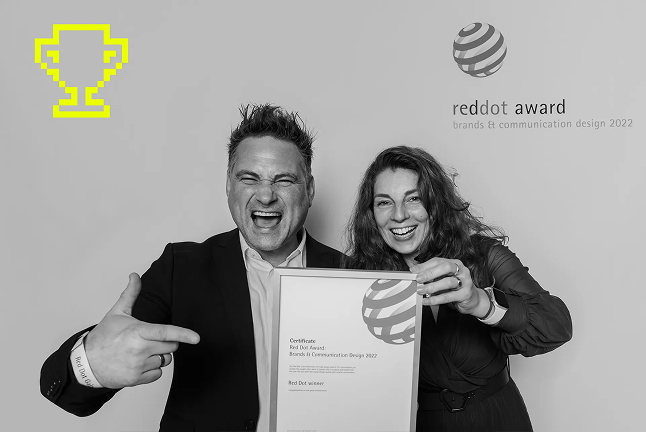
Red Dot Award · 235+ brand projects · Full-Thinking approach
Companies change. Strategies evolve, business models are adapted, and markets shift. Yet often, the brand remains stuck in the past. This is exactly where the tension between reality and external perception arises. Rebranding in the context of corporate change means consciously closing this gap. It is not about cosmetic adjustments, but about a clear realignment that connects strategy, identity, and communication.
· Red Dot Award
· 235+ brand projects
· Full Thinking approach
Why rebranding is crucial during corporate change
Changes within a company are rarely superficial. They affect structures, processes, responsibilities, and often the corporate culture as well.
If these changes are not visible in the brand identity, uncertainty arises.
Signs of this:
- Contradictory messages
- Unclear positioning
- Outdated appearance
- Irritation among employees or customers
What rebranding specifically achieves during corporate change
A structured process connects strategic goals with a clear brand identity.
Rebranding helps to:
- Communicate strategic realignment understandably
- Maintain trust with existing target groups
- Involve employees in the change
- Reduce complexity
- Build a consistent appearance
Rebranding thus becomes an instrument of leadership, not just design.

Services in the context of rebranding and change
Analysis of the change context
Evaluation of strategic goals, market position, internal perception, and cultural factors.
Brand strategy in transition
Definition of a clear positioning that reflects the new direction while allowing for continuity with existing elements.
Structure and brand architecture
Reorganization of service areas, sub-brands, or business models.
Communication concept
Development of clear core messages for internal and external target groups.
Visual realignment
Derivation of a consistent appearance based on the strategic foundation.
Implementation and support
Support for internal rollout, training, and long-term application.
Our process: Rebranding during corporate change

Phase 1 – Analyse & Markenbild
Wir untersuchen Wahrnehmung, Wettbewerb & Zielgruppen.

Phase 2 – Positionierung & Kernbotschaften
Wir verdichten strategische Leitplanken & differenzierende Aussagen.

Phase 3 – Visuelle Identität
Wir gestalten das Corporate Design und bauen modulare Systeme.

Phase 4 – Designsysteme & Guidelines
Damit Marken langfristig stabil, skalierbar und konsistent bleiben.
Phase 5 – Rollout & Aktivierung
Launch, Vorlagen, interne Schulungen.

Phase 6 – Weiterentwicklung
Regelmäßige Updates für Marken, die wachsen.
Phase 1 – Analyse & Markenbild
Wir untersuchen Wahrnehmung, Wettbewerb & Zielgruppen.
Phase 2 – Positionierung
Strategische Leitplanken & Kernbotschaften.
Phase 3 – Visuelle Identität
Corporate Design & modulare Systeme.
Phase 4 – Designsysteme & Guidelines
Damit Marken langfristig stabil, skalierbar und konsistent bleiben.
Phase 5 – Rollout & Aktivierung
Launch, Vorlagen, interne Schulungen.
Phase 6 – Weiterentwicklung
Regelmäßige Updates für Marken, die wachsen.
Who rebranding during change is particularly relevant for
For companies undergoing a generational transition
When new leadership brings new perspectives
For organizations after a merger or acquisition
When different cultures and brands are being merged
For growing companies
That are redefining their position in the market
For executive management
Who want to lead change strategically
For HR & Employer Branding
Consistent appearance across all touchpoints
For B2B companies in Düsseldorf and NRW
That need to reorganize and communicate complex services
PROOF & REFERENCES

brand projects


Why R211 for rebranding and change

Strategy-oriented approach
Rebranding starts with goals, not with design

Holistic thinking
Brand, structure, and communication are considered together

Clarity in the change process
Complex transformation becomes understandable

Experience with institutions and medium-sized businesses
Structured processes even in demanding contexts
Rebranding and corporate change in Düsseldorf and NRW
Düsseldorf is a dynamic business location with high competitive density. Here, change processes are often part of strategic development. Clear brand management ensures that change is perceived not as a break, but as an evolution.
Project logic for rebranding during change
The scope of such a project depends on:
- Depth of strategic change
- Number of units involved
- Internationality
- Scope of communication
- Internal involvement
Projects in the context of rebranding and change often range in the mid five-figure area
depending on objectives and complexity
Frequently asked questions about rebranding and corporate change
When is rebranding truly useful?
When positioning, target group, or the market environment have changed and the brand and strategy no longer align.
How much does professional rebranding cost?
Costs vary greatly depending on the scope, from strategic brand analysis to a complete visual realignment.
What is the difference between rebranding and redesign?
Rebranding concerns the strategic repositioning of the brand. Redesign usually refers only to the visual appearance.
How does rebranding affect existing customers?
Implemented correctly, it strengthens trust. However, without clear communication, it can trigger uncertainty.
How do you avoid loss of identity during rebranding?
Through a clear definition of the brand core and a consistent strategic foundation.