
Developing Brand Identity – A Brand with a Clear Stance and Distinct Character

brand design
Red Dot Award · 235+ brand projects · Full-Thinking approach
A strong brand identity makes visible what a company stands for, how it thinks, and how it wants to be perceived. It connects strategy, stance, language, and design into a consistent overall picture. Developing a brand identity creates more than just recognition. It establishes a clear foundation for communication, design, and long-term brand management—internally and externally.
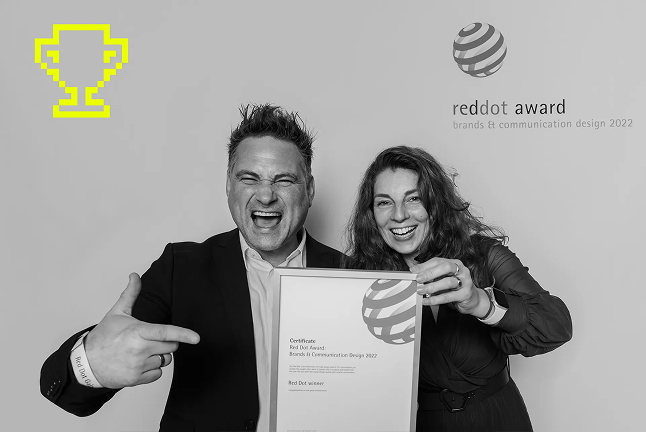
· Red Dot Award
· 235+ brand projects
· Full Thinking approach
Why Companies Need a Clear Brand Identity
Many companies have strong capabilities and established structures. Yet it often remains unclear what defines the brand at its core and how it differs from other companies.
Typical challenges include:
- Unclear values and stance
- Interchangeable brand messages
- Different language across channels
- Lack of visual consistency
- Low identification within the company
What a Strong Brand Identity Delivers
A clearly developed brand identity gives the brand direction, character, and recognition.
It creates:
- A clear self-understanding
- Clear values and a recognizable stance
- Consistent language and communication
- A visual identity with a strategic foundation
- Greater trust among customers and business partners
- Higher identification among employees
Brand identity thus becomes the connecting element between corporate strategy, communication, and design.

Services for Developing a Brand Identity
Brand Analysis
We analyze the company, market, competition, target groups, and existing perception. This reveals which characteristics are already part of the brand and where clarity is lacking.
Defining the Brand Core
We distill the central strengths, competencies, and convictions of the company into a clear brand core.
Brand Values and Stance
We develop values and principles that align with the company’s reality and serve as guidance for decisions and communication.
Brand Personality
We define how the brand appears, speaks, and shapes relationships with its target groups. This creates a distinct and comprehensible character.
Brand Promise and Messages
We formulate a credible brand promise and core messages that clearly convey the brand’s value and stance.
Visual and Verbal Identity
We translate the strategic brand identity into language, tone, Corporate Design, and concrete brand applications.
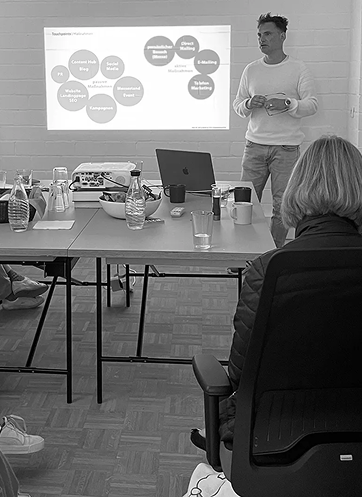
Our Process for Developing Brand Identity

Phase 1 – Analyse & Markenbild
Wir untersuchen Wahrnehmung, Wettbewerb & Zielgruppen.

Phase 2 – Positionierung & Kernbotschaften
Wir verdichten strategische Leitplanken & differenzierende Aussagen.

Phase 3 – Visuelle Identität
Wir gestalten das Corporate Design und bauen modulare Systeme.

Phase 4 – Designsysteme & Guidelines
Damit Marken langfristig stabil, skalierbar und konsistent bleiben.
Phase 5 – Rollout & Aktivierung
Launch, Vorlagen, interne Schulungen.

Phase 6 – Weiterentwicklung
Regelmäßige Updates für Marken, die wachsen.
Phase 1 – Analyse & Markenbild
Wir untersuchen Wahrnehmung, Wettbewerb & Zielgruppen.
Phase 2 – Positionierung
Strategische Leitplanken & Kernbotschaften.
Phase 3 – Visuelle Identität
Corporate Design & modulare Systeme.
Phase 4 – Designsysteme & Guidelines
Damit Marken langfristig stabil, skalierbar und konsistent bleiben.
Phase 5 – Rollout & Aktivierung
Launch, Vorlagen, interne Schulungen.
Phase 6 – Weiterentwicklung
Regelmäßige Updates für Marken, die wachsen.
Who Benefits from Developing a Brand Identity
For New Companies
A clear brand identity provides orientation from the start for positioning, communication, and design.
For Medium-Sized Companies
Established companies benefit from a sharpened identity when their presence no longer aligns with the current company reality.
For Companies in Transition
Growth, succession, mergers, or strategic realignment often require a new shared brand understanding.
For B2B and Industrial Companies
Complex services require a clear identity so that competence, stance, and differentiation become understandable.
For HR & Employer Branding
Consistent appearance across all touchpoints
For Companies with Inconsistent Brand Presence
When communication, design, and behavior convey different images, a clear brand identity restores consistency.
PROOF & REFERENCES
Brand Projects


Why R211 for Developing Your Brand Identity

Identity from Company Reality
We do not develop an artificial brand personality, but work with the actual strengths, values, and goals of the company.

Strategy Before Design
Visual identity emerges from a clear substantive and strategic foundation.

Holistic Approach
Brand core, values, language, design, and application are developed as an interconnected system.

Clarity for Complex Organizations
We structure diverse perspectives and create an identity that works internally and remains understandable externally.
Brand Identity for Companies in Düsseldorf and NRW
Düsseldorf and North Rhine-Westphalia represent a diverse business landscape of medium-sized companies, industry, technology, consulting, and institutions. In this environment, a professional presence alone is not enough.
A clear brand identity helps companies make their stance, competence, and distinctiveness visible. It strengthens recognition and creates a shared foundation for internal and external communication.
Project Logic in Developing a Brand Identity
Developing a brand identity is guided by the individual starting point and strategic goals of the company.
Relevant factors include:
- Existing positioning and brand perception
- Company history and culture
- Number of target groups and business areas
- Complexity of the service portfolio
- Involvement of internal stakeholders
- Scope of visual and verbal implementation
A brand identity is not created by individual terms.
It becomes credible when stance, communication, and behavior consistently align.
Frequently Asked Questions About Brand Identity
What does it mean to develop a brand identity?
This involves defining the brand core, values, stance, personality, language, and visual principles. They form the foundation for how a brand is understood internally and perceived externally.
What belongs to a brand identity?
A brand identity includes positioning, values, brand promise, personality, tone, visual design, and the brand’s behavior, among other elements.
What is the difference between brand identity and brand image?
Brand identity describes the self-image and strategic direction of the brand. Brand image describes how the brand is actually perceived externally.
When should a brand identity be revised?
During company growth, Rebranding, new target groups, changed services, or when communication and appearance no longer align with corporate strategy.
Why is a clear brand identity important?
It provides orientation, strengthens recognition, and ensures that communication, design, and behavior convey a consistent brand image.