

Developing a corporate identity – the foundation for a clear corporate identity

brand design
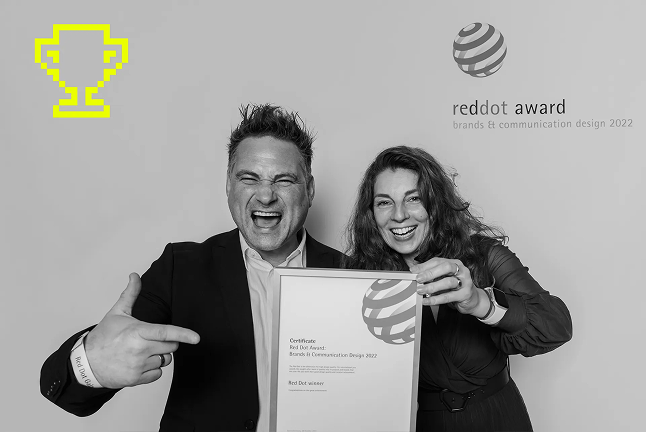
Red Dot Award · 235+ brand projects · Full Thinking approach
A strong corporate identity is not created through individual measures. It is created through clarity about who a company is, what it stands for, and how it wants to be perceived. Developing a corporate identity means consciously defining identity and systematically translating it into communication, culture, and brand management. This creates a consistent overall picture that provides orientation—for customers, employees, and partners. For companies in Düsseldorf, NRW, and beyond, developing a corporate identity forms the basis for sustainable brand strength.
· Red Dot Award
· 235+ brand projects
· Full Thinking approach
Why companies should develop their corporate identity
Many companies grow successfully over the years.
Typical consequences:
- Inconsistent communication
- Different external perception
- Lack of recognisability
- Lower employee identification
- Unclear positioning in the competitive landscape
It provides internal orientation and external differentiation.
What developing a corporate identity really changes
A professionally developed corporate identity creates a shared framework for all areas of the company.
It ensures:
- A clearly defined corporate identity
- Consistent communication across all touchpoints
- Greater brand recognisability
- Stronger identification within the company
- Consistent decision-making foundations
- Long-term differentiation in the market
This makes corporate identity the strategic foundation for sustainable growth.

Services for developing a corporate identity
Analysis of the company and perception
Analysis of corporate culture, market position, communication, and existing brand perception.
Defining vision, mindset, and values
Development of the company’s core identity building blocks.
Positioning and differentiation
Sharpening the company profile and defining its strategic role in the market.
Communication principles and tone of voice
Developing clear language and consistent messaging.
Corporate Design as an expression of identity
Translating the corporate identity into a visual system.
Integration into the organisation and brand
Embedding the corporate identity in communication, processes, and corporate culture.
Our process: developing corporate identity with Full Thinking

Phase 1 – Analyse & Markenbild
Wir untersuchen Wahrnehmung, Wettbewerb & Zielgruppen.

Phase 2 – Positionierung & Kernbotschaften
Wir verdichten strategische Leitplanken & differenzierende Aussagen.

Phase 3 – Visuelle Identität
Wir gestalten das Corporate Design und bauen modulare Systeme.

Phase 4 – Designsysteme & Guidelines
Damit Marken langfristig stabil, skalierbar und konsistent bleiben.
Phase 5 – Rollout & Aktivierung
Launch, Vorlagen, interne Schulungen.

Phase 6 – Weiterentwicklung
Regelmäßige Updates für Marken, die wachsen.
Phase 1 – Analyse & Markenbild
Wir untersuchen Wahrnehmung, Wettbewerb & Zielgruppen.
Phase 2 – Positionierung
Strategische Leitplanken & Kernbotschaften.
Phase 3 – Visuelle Identität
Corporate Design & modulare Systeme.
Phase 4 – Designsysteme & Guidelines
Damit Marken langfristig stabil, skalierbar und konsistent bleiben.
Phase 5 – Rollout & Aktivierung
Launch, Vorlagen, interne Schulungen.
Phase 6 – Weiterentwicklung
Regelmäßige Updates für Marken, die wachsen.
Who developing a corporate identity is particularly relevant for
For managing directors
Who want to give their company a clear strategic direction.
For Marketing Managers
Who need a robust foundation for communication and brand management.
For Medium-Sized Companies
Who want to connect growth and identity.
For Companies in Transition
Mergers, reorganisations, generational change, or internationalisation.
For HR & Employer Branding
Consistent appearance across all touchpoints
For B2B Companies
Who want to communicate complex services with a clear corporate identity.
PROOF & REFERENCES
Brand projects





Why R211 for developing a corporate identity

Identity before design
We first develop the foundation and then the visible measures.

Holistic Approach
Company, culture, brand, and communication are considered together.

Clarity instead of arbitrariness
Precise identities instead of interchangeable corporate images.

Experience with complex organisations
From medium-sized businesses to industry and institutions.
Developing a corporate identity for companies in Düsseldorf and NRW
Düsseldorf is one of Germany’s leading business locations. Companies here face the challenge of presenting themselves not only visibly, but also with clear positioning.
A clearly developed corporate identity provides the foundation for being perceived as consistent and credible in the long term.
Project logic when developing a corporate identity
The scope of a corporate identity project depends on:
- Company size
- Number of business units
- Complexity of the organisational structure
- Extent of internal alignment
- Communication requirements
- Strategic corporate objectives
Developing a corporate identity does not mean creating a new visual identity.
It means strategically defining a company’s identity and embedding it for the long term.
Frequently asked questions about developing a corporate identity
What does it mean to develop a corporate identity?
Developing a corporate identity means strategically defining a company’s values, mindset, positioning, and communication, and aligning them consistently.
Why is a corporate identity important?
It provides orientation, strengthens recognisability, and ensures consistent communication internally and externally.
How does corporate identity differ from Branding?
Corporate identity describes the company’s identity. Branding makes this identity visible and tangible.
When should a corporate identity be developed or revised?
In cases of growth, Rebranding, strategic change, or when the existing identity no longer matches the company’s reality.
For which companies is corporate identity particularly relevant?
For medium-sized companies, B2B companies, and organisations with complex structures and communication requirements.